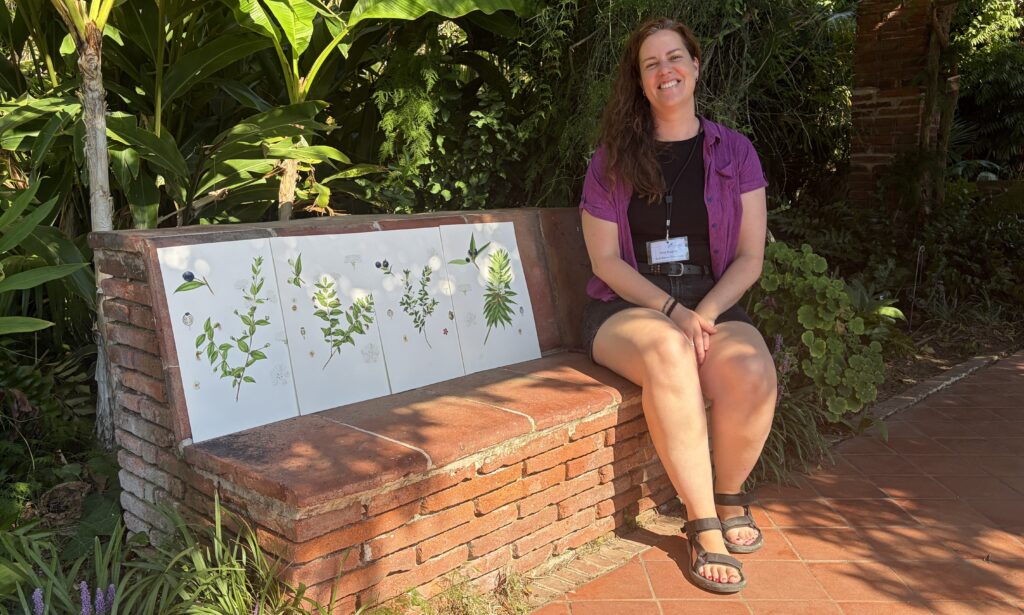
On 20 September, the first edition of the Eugeni Sierra International Botanical Illustration Residency came to an end. The project featured the work of illustrator Ana Ruano and concluded with the creation of more than eight finished botanical illustrations.
The aim of this residency is to document the flora of the Marimurtra Botanical Garden through scientific illustration, creating educational resources that help visitors discover and better understand the plant world.
Of the nearly 3,000 species found in the Garden, this first residency focused on exploring the different varieties of myrtle (Myrtus) preserved in its collection.
The Myrtles of Marimurtra: From Taxonomy to Art
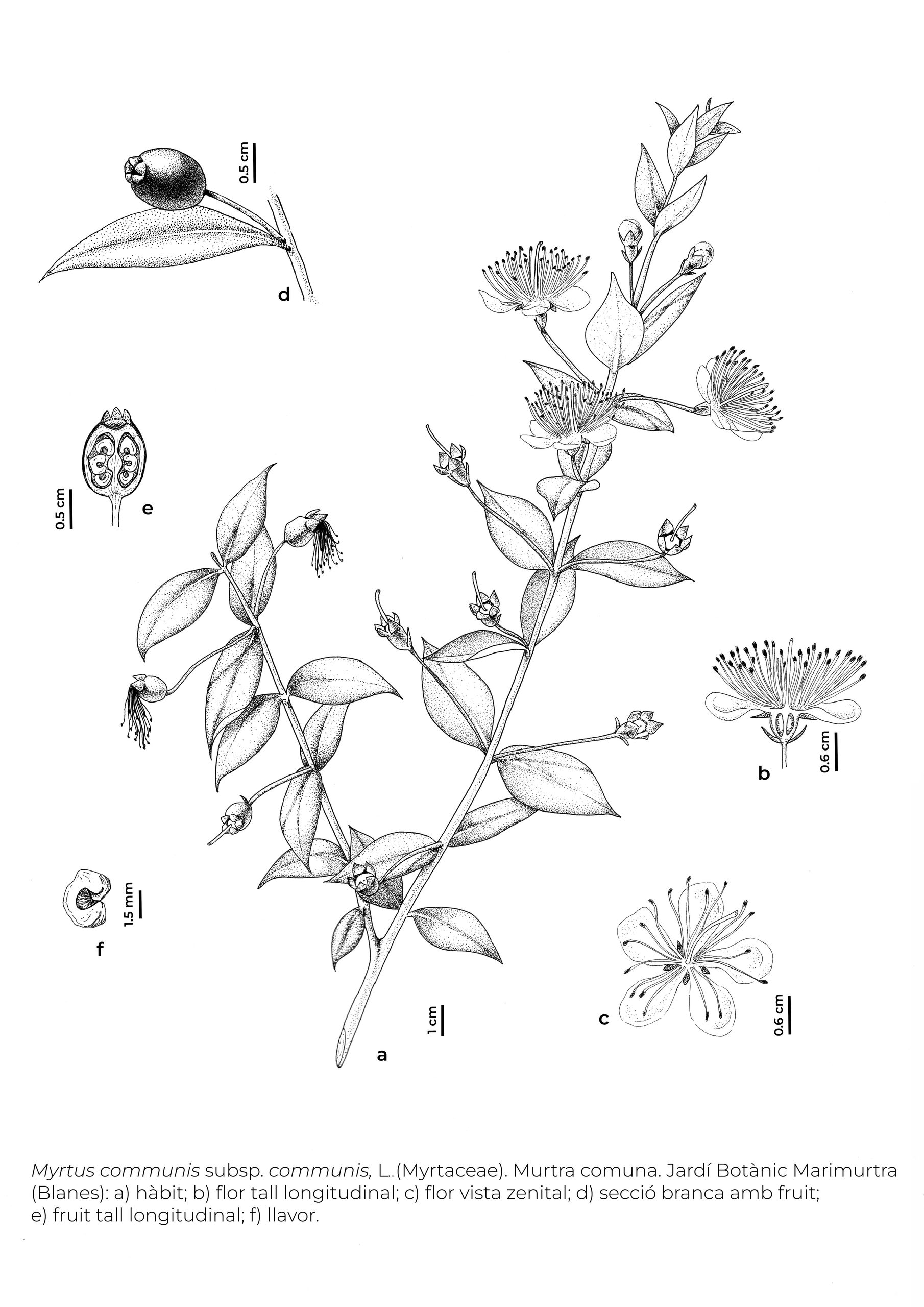
1. Common Myrtle (Myrtus communis subsp. communis)
This is the most common type of myrtle found in the Garden. It is a shrub that can grow up to 3 metres tall, with simple, ovate-lanceolate, deep green, aromatic leaves. Its white flowers, which are also highly fragrant, are distinguished by their long, prominent stamens, a characteristic feature of the myrtle family (Myrtaceae).
Its fruit is a dark purplish-blue berry, which is edible and has traditionally been used to make jams and liqueurs. The plant flowers in spring, while its fruits begin to develop in summer and ripen in autumn.
- Black-and-white illustration: provides a detailed view of the leaf shape, its glabrous (hairless) texture, and the precise morphology of the flower, fruit and seed.
- Colour illustration: offers a realistic representation of the plant’s overall form, bringing together all the elements observed individually.
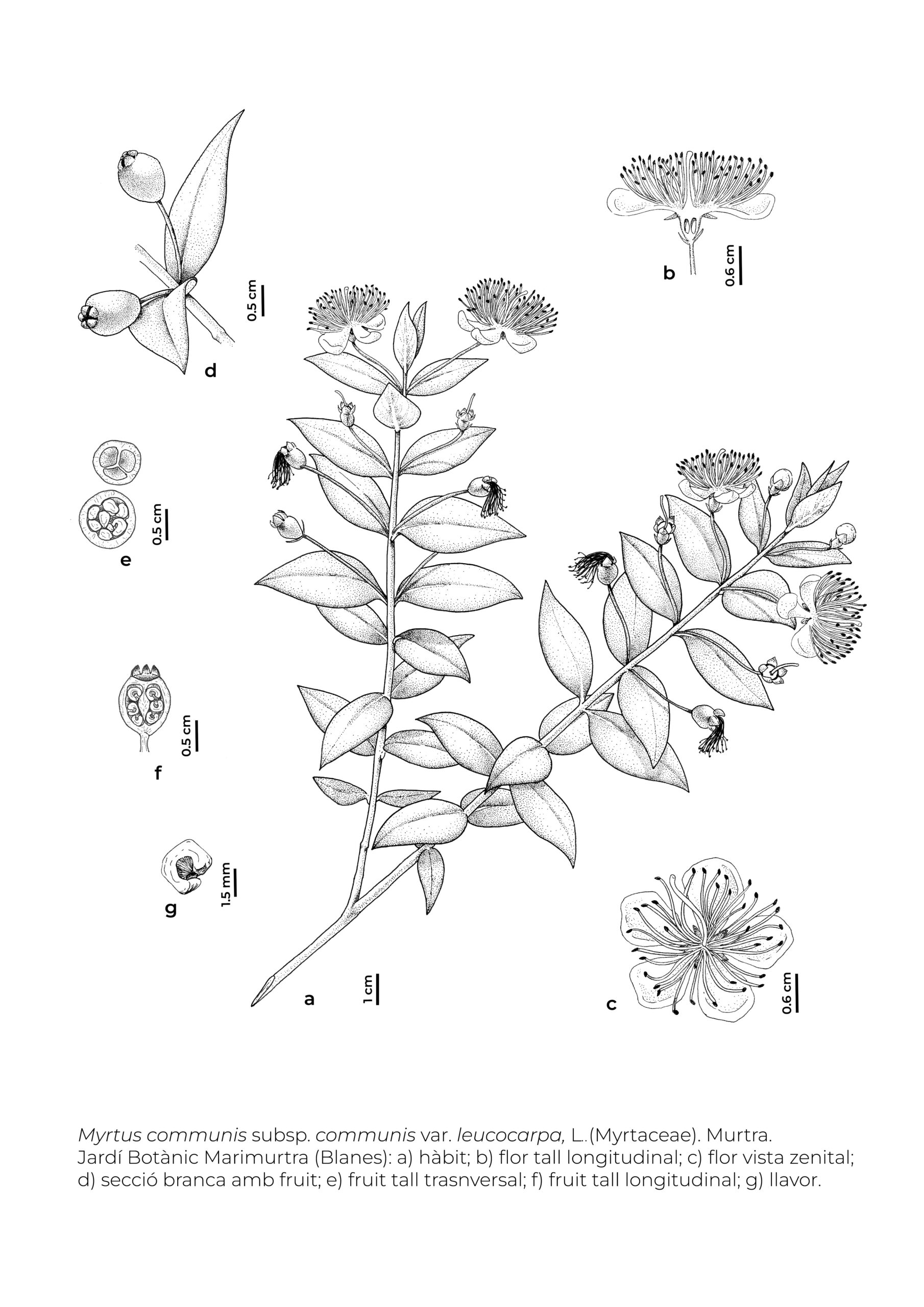
2. White-Fruited Variety (Myrtus communis subsp. communis var. leucocarpa)
This variety is almost identical to common myrtle in terms of its vegetative and floral characteristics. However, its main distinguishing feature is its fruit: instead of ripening to dark shades, it develops a creamy-white colour.
When comparing the ink illustrations of both plants, they reveal very similar structural information. It is only when looking at the colour illustration that the detail making this variety unique becomes apparent. At Marimurtra, it can be found in the Costa de Sventenius area and in another area that is currently closed to visitors.
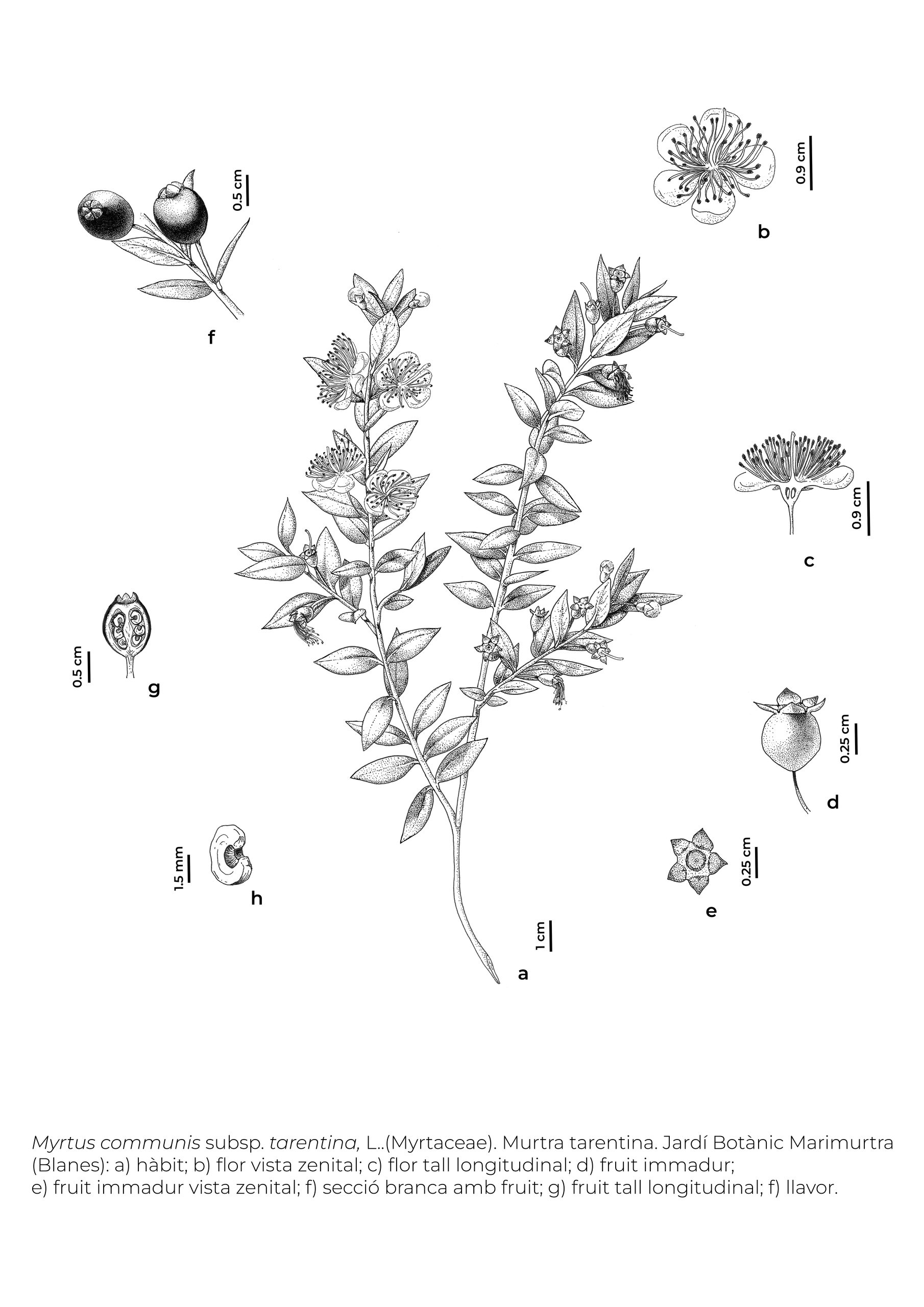
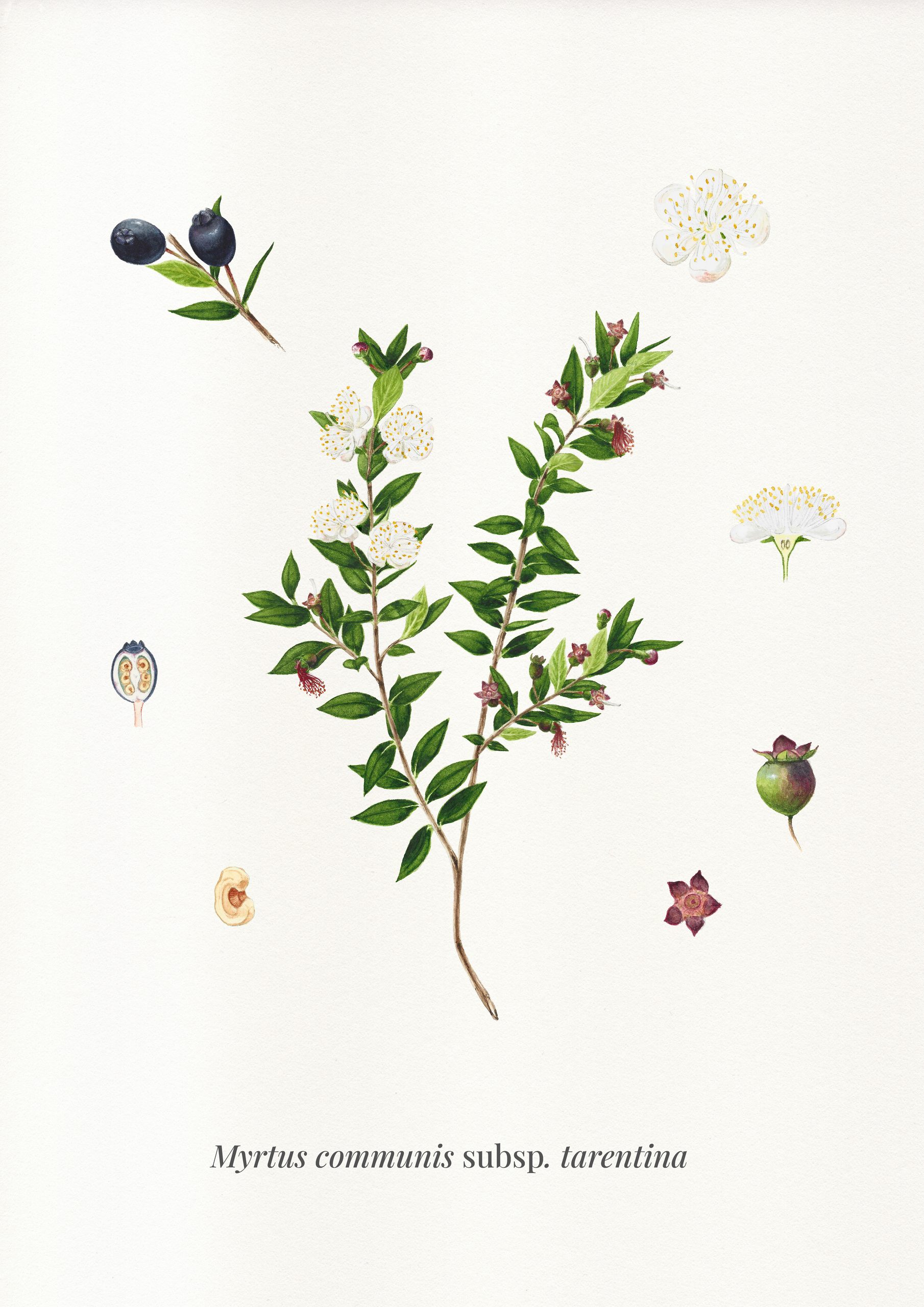
3. Small-Leaved Myrtle (Myrtus communis subsp. tarentina)
This subspecies is distinguished by its noticeably smaller leaves compared to common myrtle, along with slightly smaller flowers.
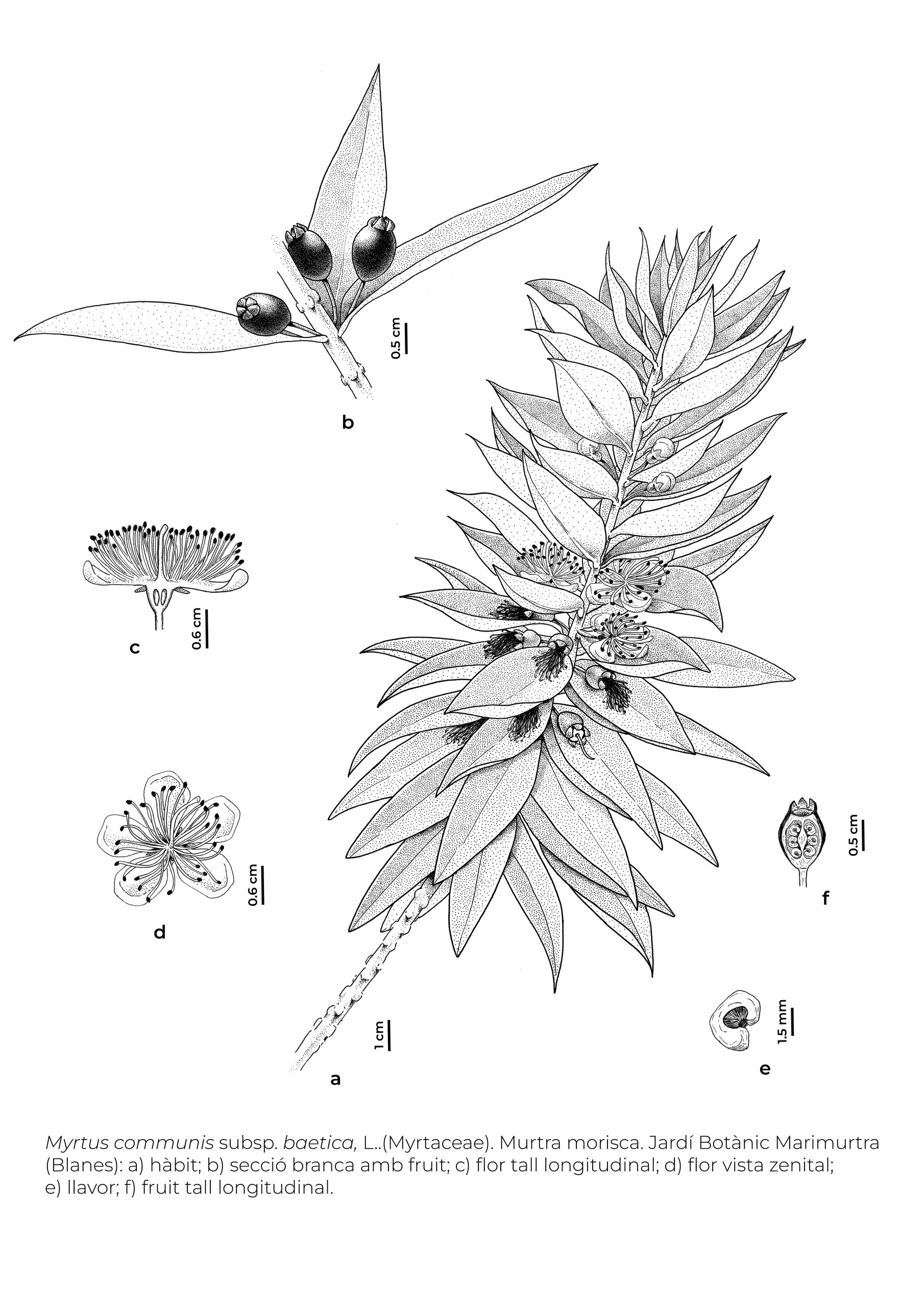
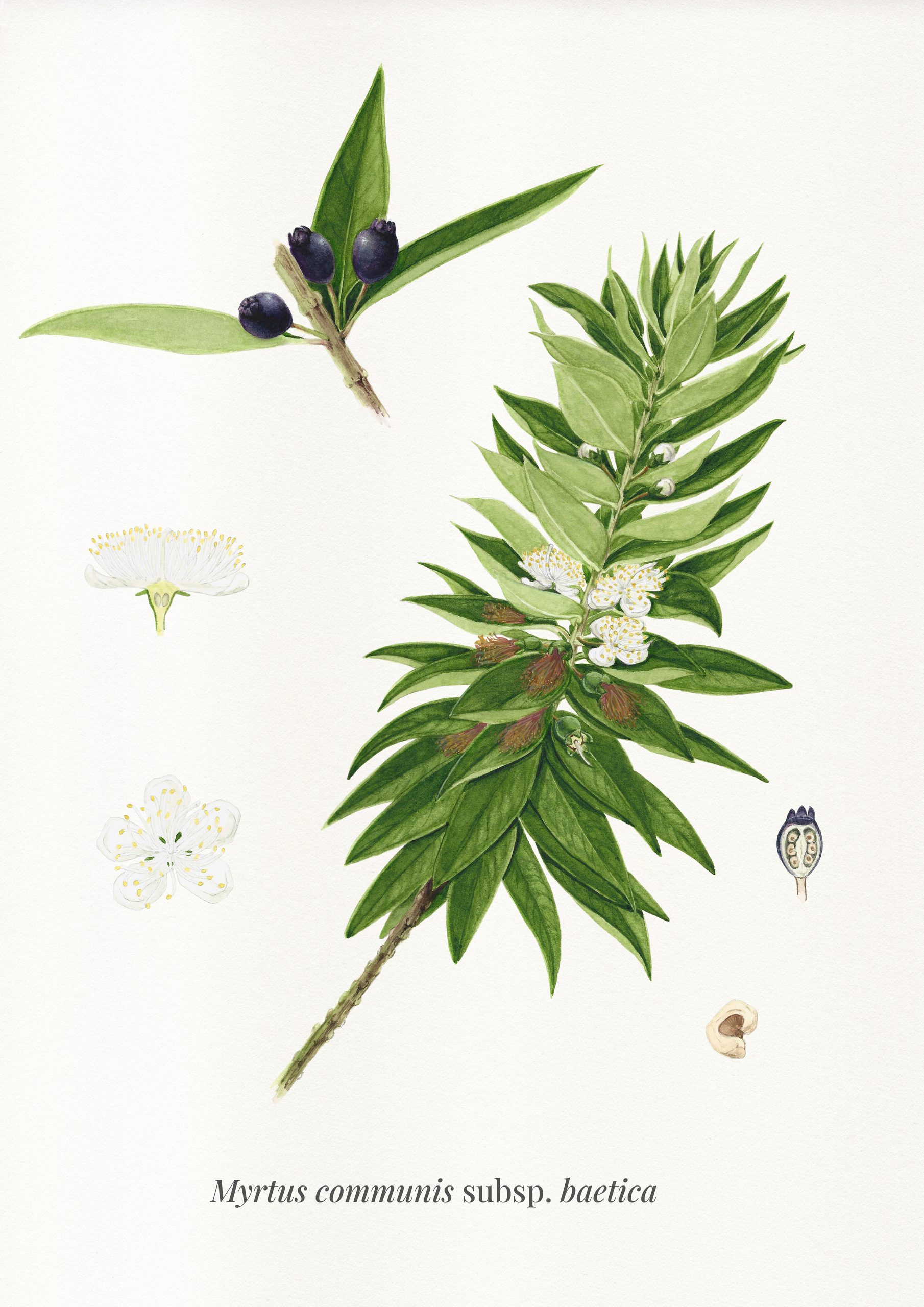
4. Moorish Myrtle or Alhambra Myrtle (Myrtus communis subsp. baetica)
This subspecies has larger, broader and more elongated leaves. Unlike common myrtle, which has opposite leaves arranged in pairs, subsp. baetica typically develops its leaves in groups of three (whorled) around the stem, giving it a much leafier, denser and more slender appearance.
Alhambra myrtle was one of the most highly prized ornamental plants in the Nasrid courts from the 1st century onwards and adorned the famous Patio de Comares (also known as the Patio de los Arrayanes) at the Alhambra in Granada. During the 18th and 19th centuries, it gradually disappeared from the Iberian Peninsula due to changing gardening trends, being replaced by common myrtle. It was considered virtually extinct in Spain until botanists Manuel Caseres and José Tito (University of Granada) located and recovered centuries-old specimens in 2005.
At Marimurtra, a young specimen can be seen along the Camí d’Augustin Pyrame de Candolle, opposite the ethnobotanical area.
Future Editions
The first edition of the Eugeni Sierra International Residency has been a success in terms of botanical documentation and public engagement with plant science.
The Marimurtra Botanical Garden will continue to promote the connection between science and art. Applications for the 2027 edition will open this coming December.