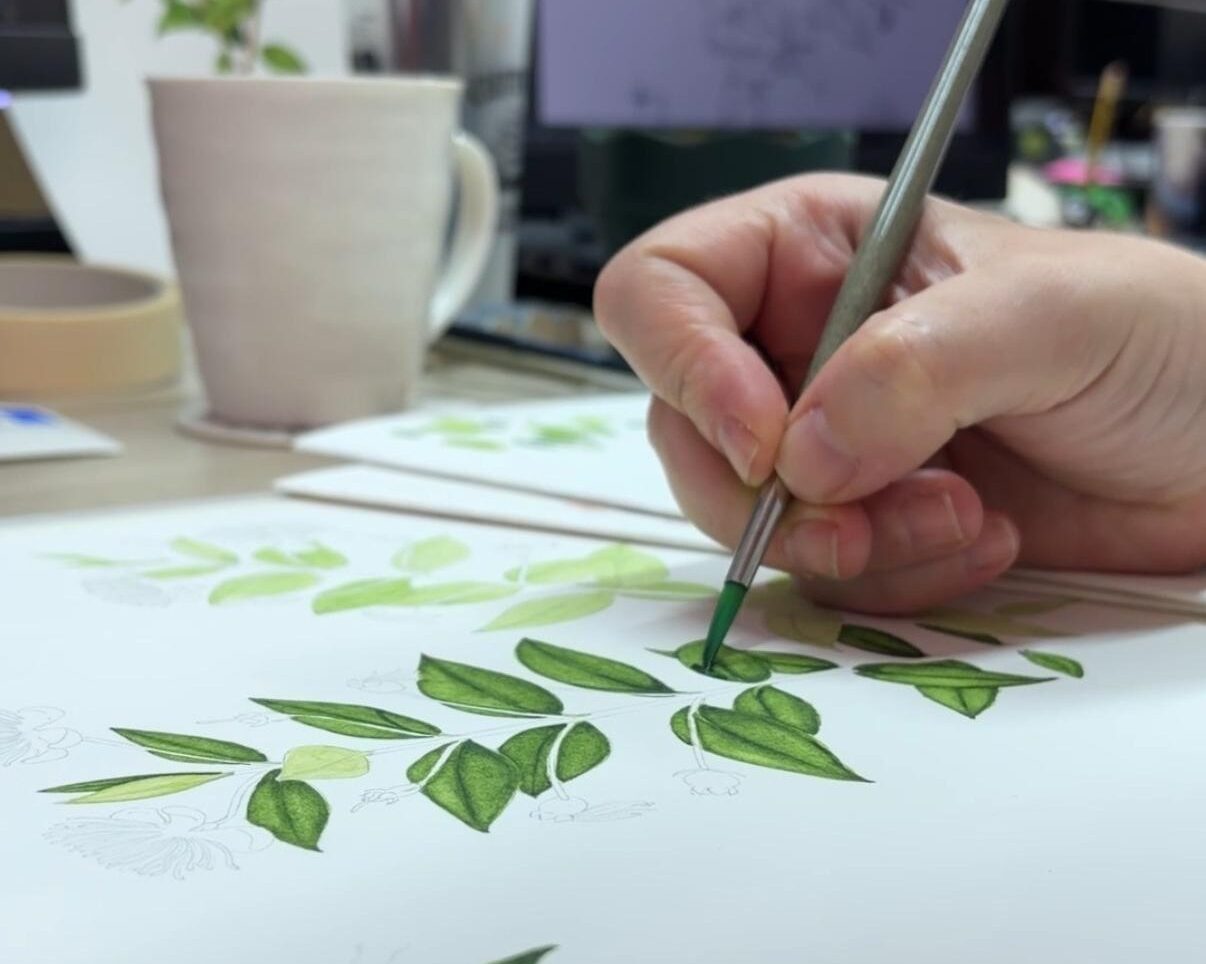
The first edition of the Eugeni Sierra International Botanical Illustration Residency has got off to a great start with Ana Ruano, scientific illustrator and biologist. During her stay at Marimurtra, she is working on the creation of botanical plates in black and white and colour.
Plants do not live in isolation, but rather form populations and are found within diverse communities and ecosystems. In nature, they can be found on the ground, on other plants (epiphytes or parasites) or in aquatic environments, surrounded by many elements that a photograph usually captures together. In a botanical plate, however, the plant is represented individually to clearly show the characteristics that allow it to be recognised and identified.
Ana Ruano’s task consists of carefully observing and studying each specimen in order to understand its organs, habit, proportions, textures and details. Botanical illustration requires great scientific rigour and is developed in constant dialogue with Marimurtra’s scientific team, which reviews and validates the interpretation of the specimen. The result is a tool of great scientific and educational value for the recognition and identification of species.
For this first edition of the residency, the Garden has decided to focus the project on the common myrtle (Myrtus communis) and various varieties found at Marimurtra, the species that gives the Marimurtra Botanical Garden its name.
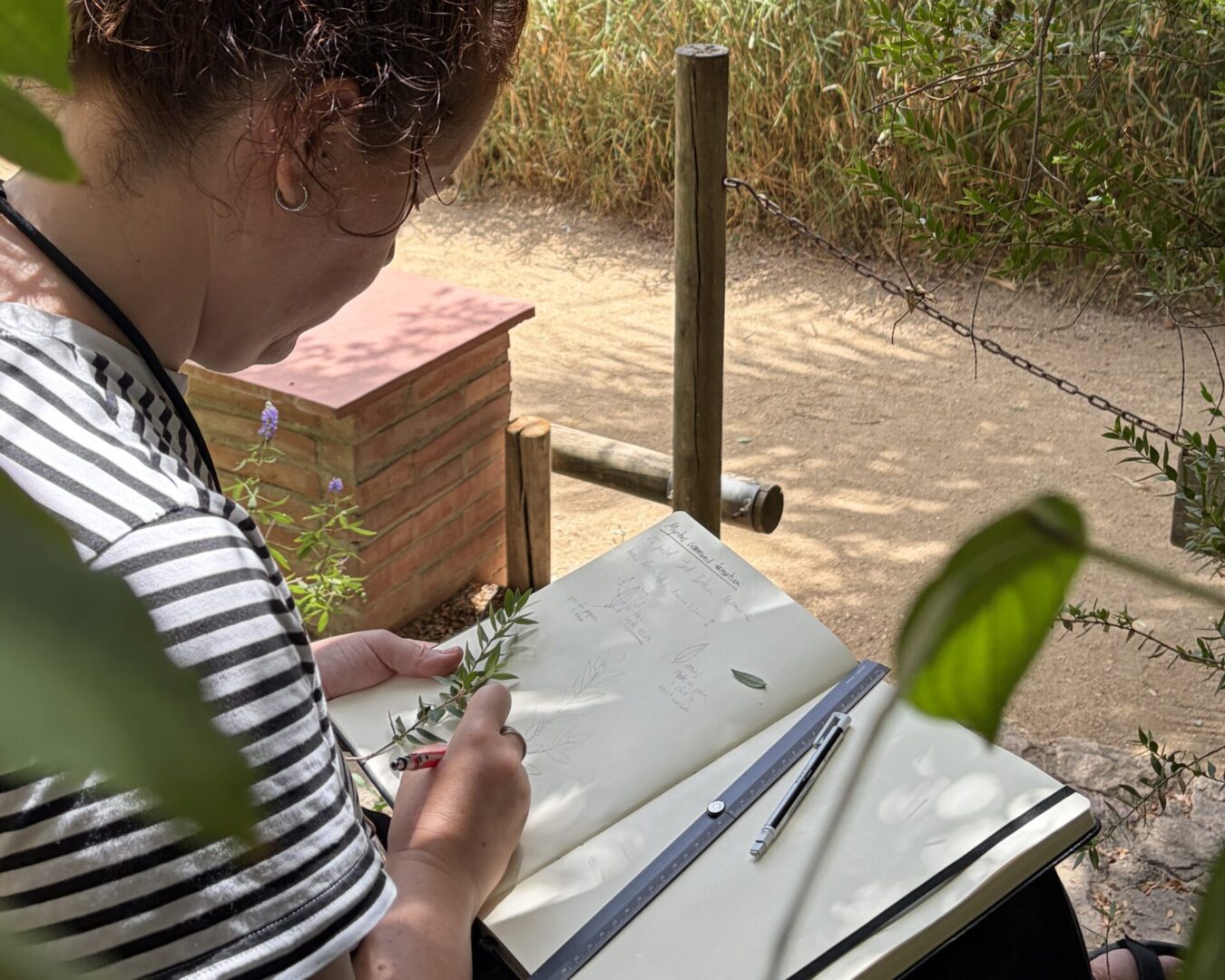
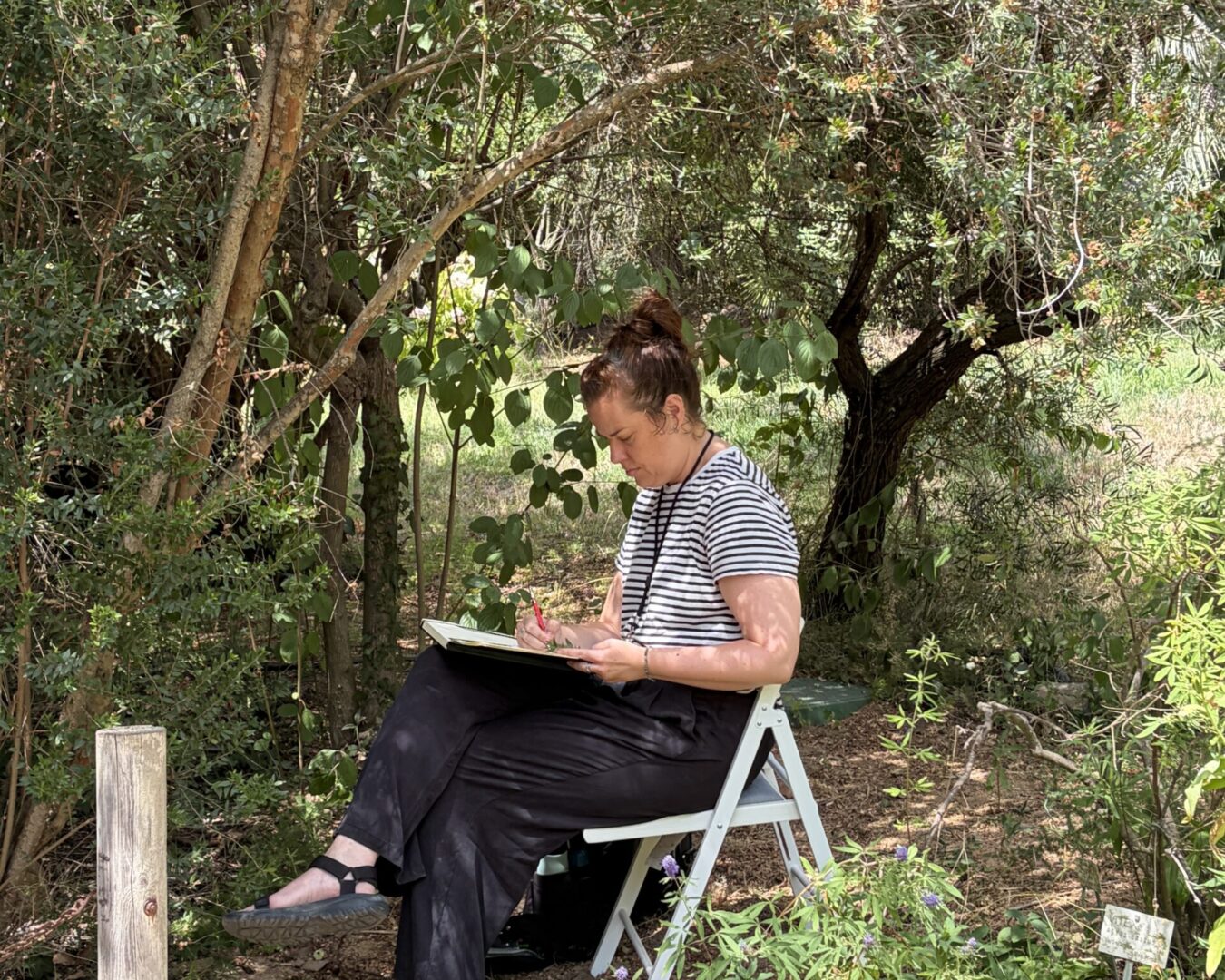
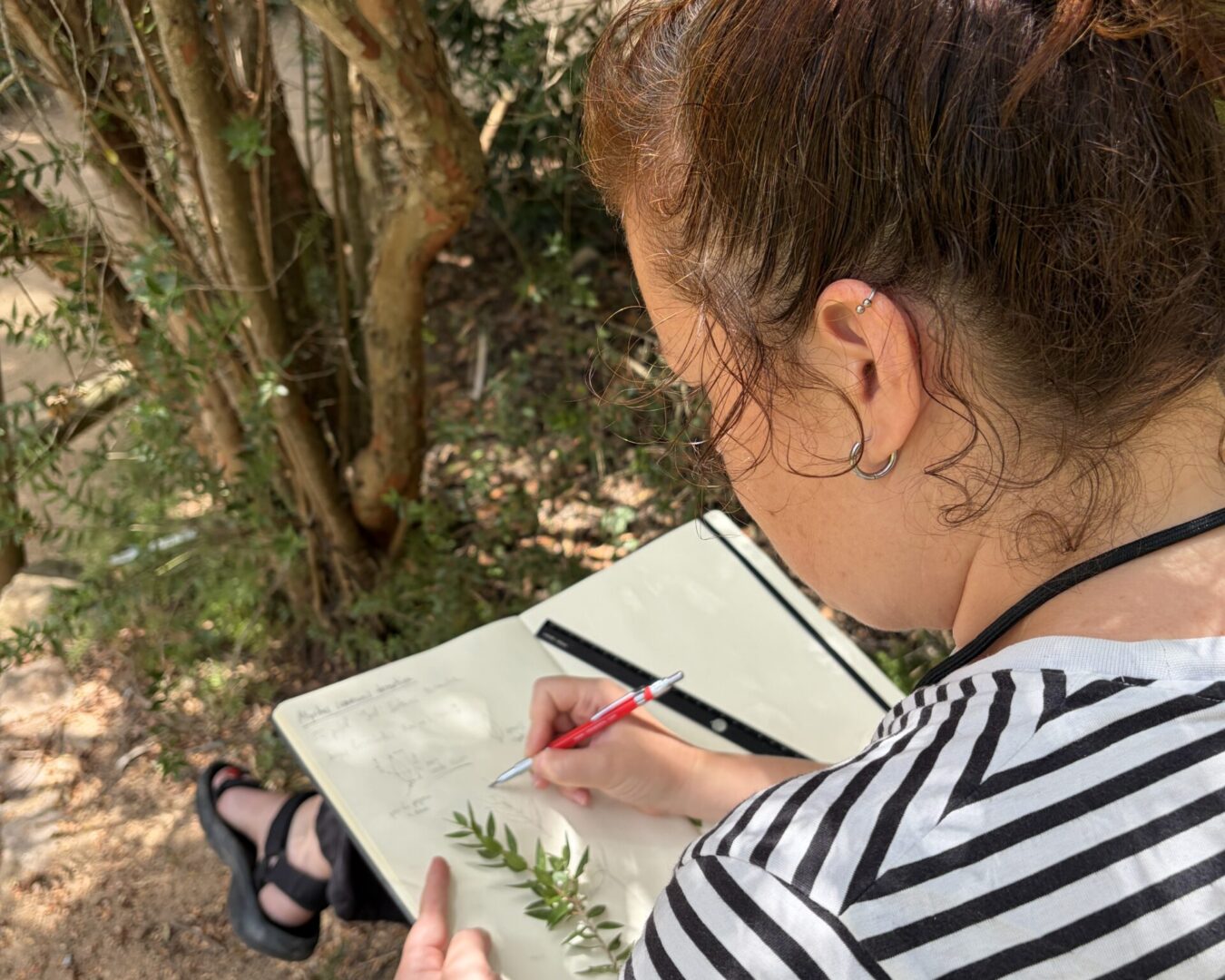
The creation of a botanical plate is a long, meticulous process made up of several stages. It all begins in situ, in the Garden, with the first sketches in the field notebook. Ana observes the plant directly and studies its dimensions, shapes, textures, colours and the details of each of its parts. She also takes measurements and photographs, which will allow her to consult specific aspects of the specimen later on. This observation is complemented by research and consultation of specialised literature.
With all the information collected, she prepares a final pencil sketch in which she accurately synthesises the characteristics of the plant. This composition is reviewed and validated by the Garden’s Scientific Directorate before continuing the process.
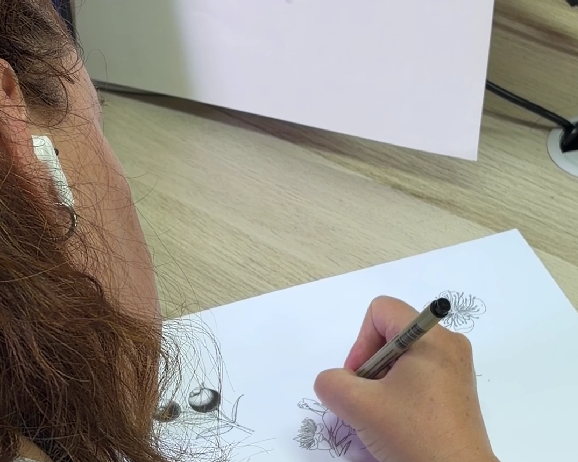
Once the sketch has been approved, the illustrator transfers it into black ink using a technique of dots and lines. The density, direction and combination of each stroke allow volumes, textures and depths to be represented, while also making the plant’s habit and distinctive features clearer. The result is the final black-and-white botanical plate.
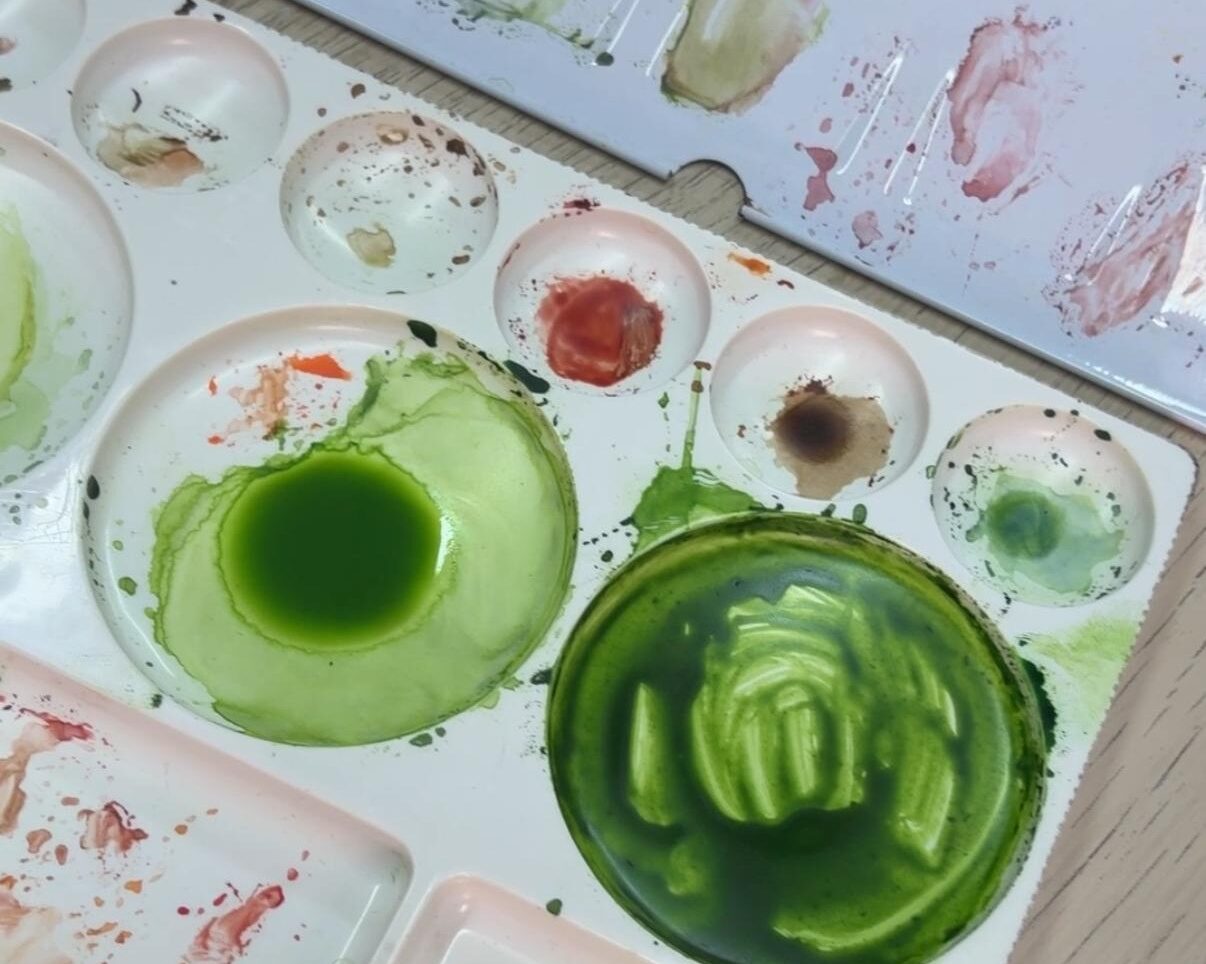
To create the colour version, she carefully traces the composition using a light table and a very soft pencil line. She then applies watercolour, working with a wide range of colours and precisely adjusting the tones and nuances of each part of the plant. This process results in the second botanical plate: the final colour version.
Finally, both plates are digitised to faithfully adjust the colour and incorporate the identifying texts and graphic scale. In this way, the final versions are prepared for display on screen and for printing.
Each plate is therefore the result of hours of observation, study, drawing, scientific review and manual work. A combination of science and art in which every dot, every line and every brushstroke has a function.
Stay tuned to discover the evolution of the project and the results of this first residency.