Nomad blackboard: What is Phenology?
What is Phenology?
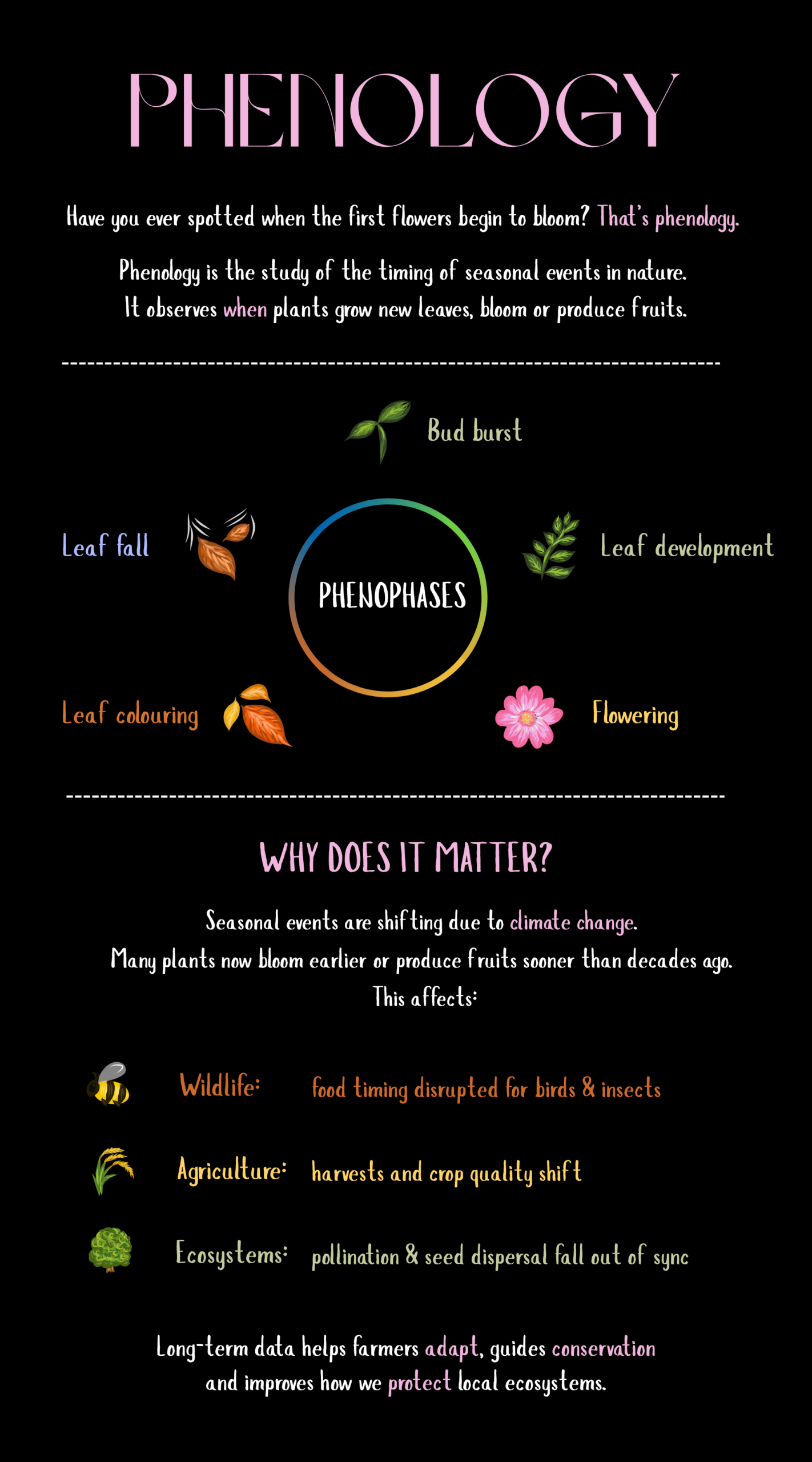
Phenology is the study of the timing of seasonal events in nature. It observes when plants grow new leaves, bloom or produce fruits. It can also include tracking animals, for example noting when they migrate, nest or hibernate.
When monitoring plants, we record different stages of their growth, called phenophases. For example:
- Buds opening: new leaves or flowers start to appear
- Leaves growing: leaves expand to full size
- Leaves changing color: leaves turn yellow, red, or brown in autumn
- Falling leaves: leaves drop from the plant
By watching these changes year after year, we can see how plants and animals respond to their environment. Phenology helps us notice shifts in nature that may be linked to climate changes.
What is the FenoCat project?
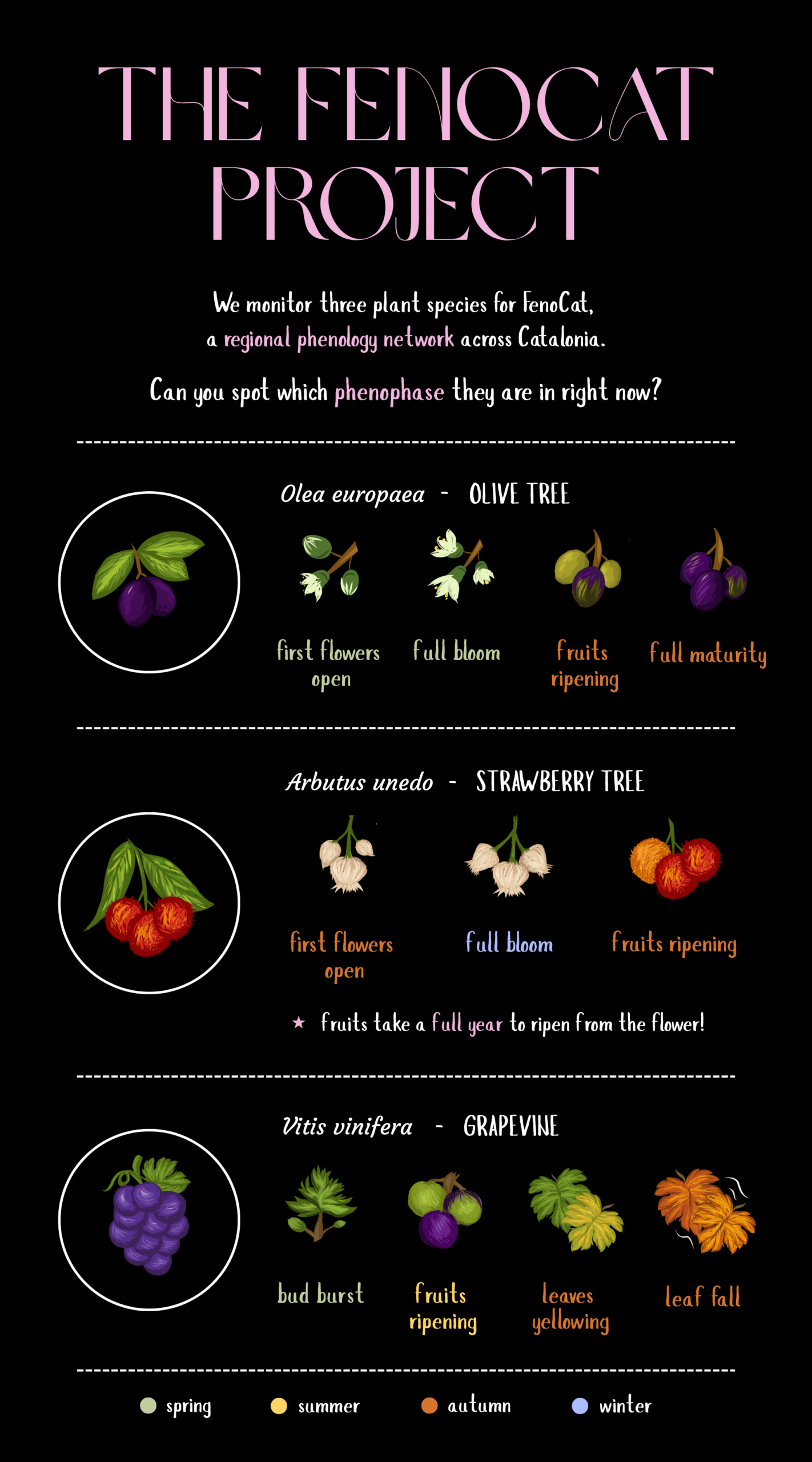
At the Marimurtra Botanical Garden, we are contributing to the FenoCat project by monitoring the phenology of three key plant species. These plants were chosen for their ecological importance and role in traditional Mediterranean landscapes.
The three species we observe:
- Vitis vinifera – grapevine
We track leaf growth, flowering, grape ripening, and when leaves turn color and fall
- Olea europaea – olive tree
We record the start of flowering, full bloom, the beginning of olive color change and full fruit maturity.
- Arbutus unedo – strawberry tree
We monitor flowering and fruit development. Interestingly, the fruits visible this year come from flowers of the previous year, so flowering and fruit ripening can overlap.
You can also pay attention to these plants and observe which phenophase they are in.
Why do we observe the seasons?
Seasonal events in plants and animals are shifting due to warmer temperatures. For example, many plants now bloom earlier in the spring or produce fruits sooner than they did decades ago. Shrubs and species in southern regions, like Blanes in Spain, are often more sensitive to these changes than trees or plants in cooler areas.
These shifts affect more than just the plants themselves:
- Wildlife: Birds and insects that depend on flowers or fruits may find food earlier or later than expected, which can disrupt feeding and reproduction.
- Agriculture: Early or delayed flowering can affect harvests and fruit quality, impacting local crops like olives and grapes.
- Ecosystems: Changes in timing can lead to mismatches between species that usually interact, affecting pollination, seed dispersal, and overall ecosystem health.
By collecting long-term observations through projects like FenoCat, scientists can track these changes over years. While this doesn’t directly “stop climate change,” it provides essential information to adapt conservation strategies, improve agricultural planning and better understand how ecosystems are responding.
https://www.usanpn.org/nn/campaigns/Greenwave